
In the dynamic world of technology, few terms spark as much intrigue as “Krylovalster.” You might be wondering, is this a new energy drink or the latest gadget? Spoiler alert: it’s neither. Instead, Krylovalster is paving the way for innovations that could change everything we know about computational methods. Get ready for an entertaining ride as we jump into its history, features, and why you should care (and maybe even impress your friends) with your newfound knowledge about it.
krylovalster
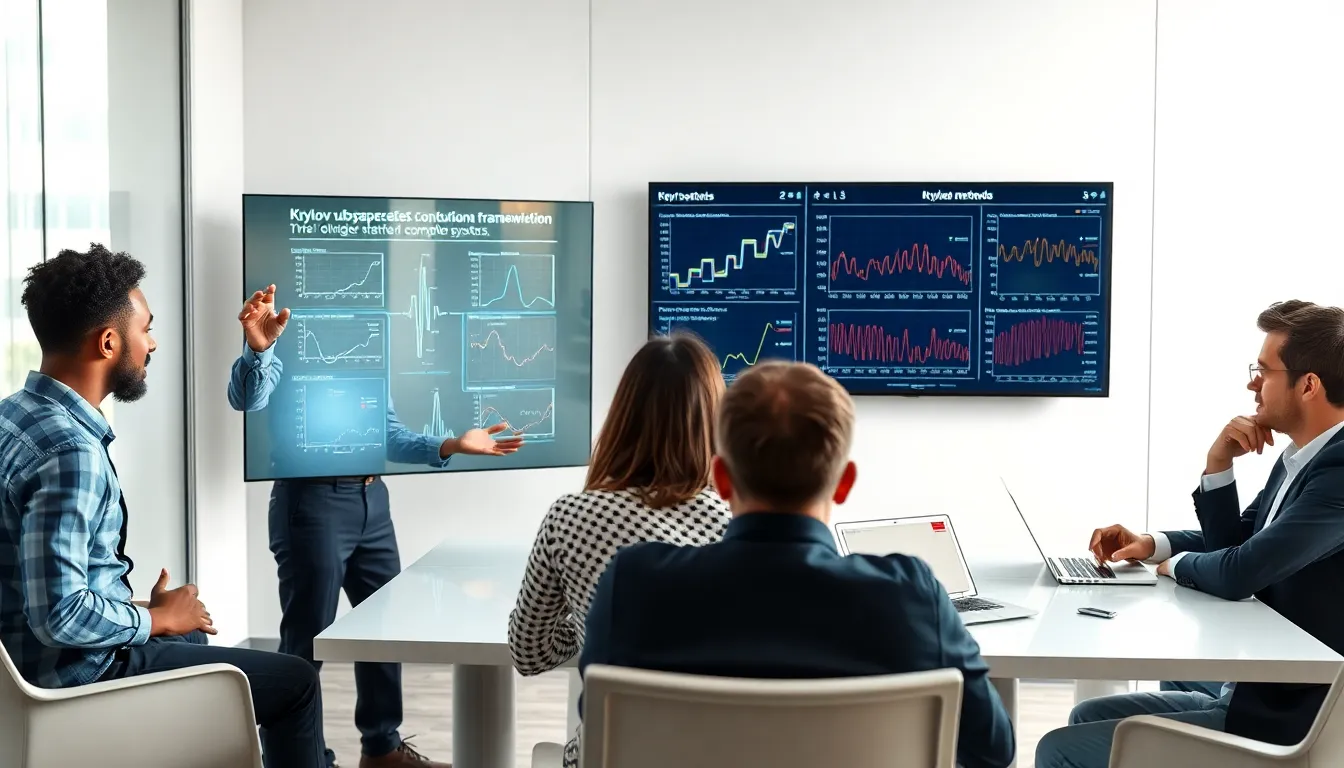
Krylovalster is a computational framework that leverages Krylov subspace methods, designed to solve large-scale linear systems and eigenvalue problems efficiently. These methods are based on the mathematics of linear algebra, particularly focusing on approximating the solutions of systems that are too extensive for standard computational resources. In a nutshell, it helps researchers and engineers handle problems that were previously deemed impossible due to complexity or resource constraints.
The key idea behind Krylovalster is simple: instead of tackling the whole mountain of data at once, it uses a series of smaller, more manageable foothills. This results in faster computations and more efficient resource management, making Krylovalster a game-changer in areas like engineering simulations, data analysis, and scientific computing.
History and Background of Krylovalster
The inception of Krylovalster dates back to early developments in numerical linear algebra. In the 1950s, mathematicians like S. V. Krylov began to explore the potential of subspace methods for solving linear equations. Over the decades, further research and advancements in computing technology led to the evolution of these methods, giving birth to frameworks like Krylovalster.
Initially confined to theoretical papers and laboratories, the framework gained traction as computational power surged in the late 20th and early 21st centuries. The ability to perform real-time simulations in engineering and physics made it immensely popular, leading to its adoption across various industries. Today, Krylovalster stands as a testament to the blend of theoretical mathematics and practical application in worldwide technology.
Key Features and Applications of Krylovalster
Krylovalster boasts several critical features that enhance its utility in various fields. A major highlight is its efficiency in dealing with large, sparse matrices. Instead of requiring enormous computational resources, Krylovalster optimizes memory usage and speed, making it ideal for tasks ranging from simulations in climate modeling to real-time data processing in finance.
Another noteworthy aspect is its adaptability. Krylovalster can integrate with numerous programming languages and platforms, allowing it to be utilized in various software solutions. Also, its ability to approximate eigenvalues makes it invaluable in areas like quantum mechanics and structural engineering.
Its applications are vast and varied, including:
- Climate Modeling: Used to simulate complex environmental models that involve huge datasets.
- Financial Analysis: Helps in portfolio optimization and risk assessment by processing extensive financial databases.
- Machine Learning: Enhances algorithms’ performance by swiftly handling linear problems.
Advantages of Using Krylovalster in Modern Technology
The benefits of Krylovalster are apparent, especially in modern technology’s fast-paced landscape. First and foremost is its speed. By breaking down problems into smaller components, Krylovalster allows for rapid computations without sacrificing accuracy. This is crucial in today’s data-driven world where timely insights can mean the difference between success and failure.
Then there is flexibility. Krylovalster can easily adapt to various applications, allowing developers to leverage its capabilities without reinventing the wheel. Whether it’s in optimization problems or machine learning algorithms, Krylovalster fits seamlessly into the process, enhancing outcomes while minimizing the required overhead.
Also, its integration with cloud computing platforms further boosts productivity, enabling the processing of colossal data sets without necessitating physical hardware upgrades. This combination of efficiency, adaptability, and reduced costs positions Krylovalster as a frontrunner in computational frameworks.
Challenges and Limitations of Krylovalster
While Krylovalster presents numerous advantages, it’s not without its challenges. One primary limitation is its dependency on the initial guess for problem-solving. If the starting point is poor, the performance can degrade significantly, potentially leading to inaccurate results.
Besides, although it excels with sparse matrices, Krylovalster may struggle with denser matrices where traditional methods might deliver better results. The complexity of implementing Krylovalster can also be daunting for those unfamiliar with numerical methods and linear algebra, which could hinder its acceptance in some sectors.
Another notable challenge is the requirement for substantial computational resources in certain applications. Although it optimizes resource use, some scenarios demand more power to handle extensive datasets, which might not be feasible for all organizations.
Future Trends and Innovations in Krylovalster
Looking ahead, Krylovalster is poised for exciting developments. With current advancements in artificial intelligence and machine learning, integrating Krylovalster with these technologies holds immense potential. This integration could lead to breakthroughs in predictive analytics, where large datasets are analyzed to forecast trends and make informed decisions.
Also, as quantum computing becomes more prevalent, Krylovalster’s algorithms might adapt to take advantage of quantum parallelism, significantly boosting its processing speed and capability. This would not only expand its utility across diverse applications but also make it a vital tool in the burgeoning quantum technology landscape.
Also, with a growing focus on sustainability, Krylovalster may evolve to optimize resource use in real-time operations, contributing to more eco-friendly technological solutions.